


Security and Fire Protection Systems: Your Complete Guide to Protecting People, Property and Business Assets
Everything You Need to Know About Security and Fire Protection Systems
Security threats and fire risks continue to evolve. As a result, businesses, commercial facilities, residential estates, and industrial sites need smarter ways to protect people, property, and operations.
Modern security and fire protection systems do far more than sound an alarm when something goes wrong. Today’s technology can detect threats, control access, monitor activity in real time, automate emergency responses, and provide valuable insights that improve safety and operational efficiency.
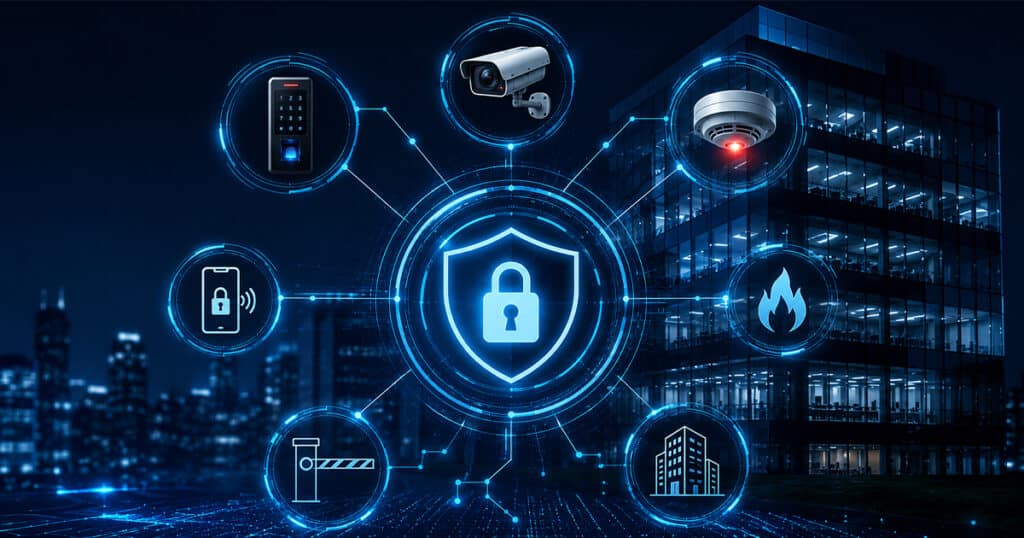
At Ushaka Security & Fire Projects, we design, install, integrate, and maintain advanced security and fire protection solutions throughout South Africa. Our expertise includes:
- Access Control Systems
- Fire Detection Systems
- Fire Protection Systems
- IP Surveillance and CCTV Systems
- Intruder Alarm Systems
- Security Barriers
- Building Management Systems (BMS)
This comprehensive guide answers the most frequently asked questions about modern security and fire protection systems and explains how integrated technologies can help safeguard your organisation.
What Is an Access Control System?
An access control system is an electronic security solution that controls who can enter or exit specific areas within a building or facility.
Unlike traditional keys, which can be lost, copied, or stolen, access control systems use secure credentials such as:
- Access cards
- PIN codes
- Mobile credentials
- Fingerprint recognition
- Facial recognition technology
These systems allow businesses to manage access permissions quickly and efficiently while creating a complete audit trail of movement throughout a facility.
Why Is Access Control Important?
Access control systems help organisations:
- Prevent unauthorised access
- Protect sensitive areas
- Monitor employee and visitor movement
- Reduce security risks
- Improve compliance and reporting
- Instantly revoke access when required
Whether you operate a small office or a large industrial facility, access control provides a higher level of security than traditional lock-and-key systems.
Types of Access Control Systems
Card-Based Access Control
Employees and authorised visitors gain access using proximity cards or smart cards.
Biometric Access Control
Fingerprint scanners, iris recognition, and facial recognition systems verify identity with exceptional accuracy.
PIN Based Access Control
Users enter a unique code on a keypad before gaining entry.
Mobile Access Control
Credentials are securely stored on smartphones and verified through Bluetooth or NFC technology.
Video Intercom and Visitor Management Systems
Visitors can be identified visually before access is granted, adding an additional layer of security.
Can Access Control Systems Integrate with Other Security Solutions?
Yes. Modern access control systems integrate seamlessly with:
- CCTV surveillance systems
- Intruder alarm systems
- Fire detection systems
- Building management systems
For example, if a fire alarm activates, designated doors can automatically unlock to facilitate safe evacuation. Similarly, if an intruder alarm is triggered, access-controlled doors can immediately lock down vulnerable areas.
This creates a fully integrated security ecosystem that responds intelligently to incidents.
Fire Detection and Fire Protection Systems
Many people use these terms interchangeably. However, they perform different functions.
What Is a Fire Detection System?
A fire detection system identifies smoke, heat, or flames and alerts building occupants before a fire spreads.
Early detection provides valuable time for evacuation and emergency response.
What Is a Fire Protection System?
A fire protection system actively suppresses or controls a fire after detection.
Examples include:
- Fire sprinkler systems
- Gas suppression systems
- Foam suppression systems
- Fire extinguishing systems
Together, fire detection and fire protection systems form the foundation of an effective fire safety strategy.
What Types of Fire Detectors Are Used?
Smoke Detectors
Ideal for most commercial and residential environments.
Heat Detectors
Perfect for kitchens, workshops, and dusty environments where smoke detectors may trigger false alarms.
Multi Sensor Detectors
These combine multiple sensing technologies to improve detection accuracy while reducing false alarms.
Beam Detectors
Designed for large open spaces such as warehouses, factories, and atriums.
Flame Detectors
Detects the infrared or ultraviolet signatures produced by open flames.
How Often Should Fire Detection Systems Be Serviced?
Routine maintenance is critical for both safety and compliance.
Best practice includes:
- Weekly visual inspections
- Monthly system checks
- Quarterly professional testing
- Annual comprehensive inspections
Regular maintenance ensures your fire detection system remains compliant and operational when needed most.
IP Surveillance and CCTV Systems
What Is the Difference Between CCTV and IP Surveillance?
Traditional CCTV systems use analogue technology and record footage to a Digital Video Recorder (DVR).
IP surveillance systems use network technology to transmit high-definition video to:
- Network Video Recorders (NVRs)
- Secure cloud storage platforms
IP cameras provide:
- Superior image quality
- Remote viewing
- Intelligent analytics
- Enhanced scalability
- Advanced cybersecurity features
For most modern installations, IP surveillance is the preferred solution.
Can CCTV Cameras Be Viewed Remotely?
Yes.
Modern surveillance systems allow authorised users to:
- View live footage
- Access recorded video
- Receive motion alerts
- Monitor multiple locations simultaneously
Access is available through secure mobile applications and web browsers.
What Camera Resolution Should I Choose?
The ideal resolution depends on your security objectives.
- 2MP to 4MP cameras are suitable for general monitoring.
- 5MP to 8MP cameras are recommended for facial recognition and licence plate identification.
- Higher resolutions provide greater forensic detail during investigations.
How Long Is CCTV Footage Stored?
Most commercial systems retain footage for approximately 30 days.
However, storage periods may extend to:
- 60 days
- 90 days
- Longer through cloud-based storage solutions
Storage requirements should always align with operational and compliance needs.
Intruder Alarm Systems
How Does an Intruder Alarm System Work?
Intruder alarm systems use multiple detection devices, including:
- Motion sensors
- Door contacts
- Window contacts
- Glass break detectors
- Vibration sensors
When unauthorised activity is detected, the system can:
- Activate a siren
- Notify security personnel
- Alert a monitoring centre
- Trigger mobile notifications
This immediate response helps minimise risk and improve incident management.
Monitored vs Unmonitored Alarm Systems
Monitored Alarm Systems
A professional monitoring centre responds to alarm activations 24 hours a day, 365 days a year.
Unmonitored Alarm Systems
These rely solely on audible alarms and nearby individuals responding appropriately.
For commercial properties, monitored alarm systems offer significantly higher levels of protection.
Security Barriers and Perimeter Protection
Security barriers play a critical role in controlling access and protecting property boundaries.
Popular solutions include:
- Boom gates
- Turnstiles
- Speed lanes
- Electric fencing
- Bollards
- Road blockers
The correct solution depends on traffic flow, threat levels, and operational requirements.
Building Management Systems (BMS)
What Is a Building Management System?
A Building Management System (BMS) is a centralised platform that controls and monitors essential building functions, including:
- HVAC systems
- Lighting
- Electrical infrastructure
- Elevators
- Access control
- Security systems
- Fire detection systems
How Does a Building Management System Improve Security?
A BMS enables multiple systems to communicate and respond automatically.
For example, when a fire alarm activates, the system can:
- Ground elevators
- Unlock emergency exits
- Release fire doors
- Activate emergency lighting
- Notify management teams
This coordinated response significantly improves occupant safety.
Can a Building Management System Reduce Costs?
Yes.
A well designed BMS helps organisations:
- Reduce energy consumption
- Improve operational efficiency
- Lower maintenance costs
- Identify system faults early
- Extend equipment lifespan
Why Integrated Security Systems Are Essential
The most effective security strategies combine multiple technologies into a single platform.
When access control, CCTV, intruder alarms, fire detection, and building management systems work together, organisations benefit from:
- Faster incident response
- Improved situational awareness
- Better reporting
- Enhanced security intelligence
- Increased operational efficiency
Integrated systems create a smarter, safer, and more resilient environment.
Why Choose Ushaka Security & Fire Projects?
At Ushaka Security & Fire Projects, we deliver fully integrated security and fire protection solutions tailored to your unique requirements.
Our team specialises in:
- Security risk assessments
- System design
- Professional installation
- Integration services
- Preventative maintenance
- Ongoing technical support
Whether you manage a commercial office, residential estate, industrial facility, warehouse, or multi-site operation, we provide scalable solutions designed for long-term performance and reliability.
Contact Ushaka Security & Fire Projects Today
Protect your people, property, and assets with industry leading security and fire protection systems.
Contact Ushaka Security & Fire Projects today to arrange a professional site assessment and discover how integrated security solutions can strengthen your organisation’s safety and resilience.